
Satara Calling Day 1 : One Long Weekend and Too Many Wrong Turns
 Written byAashish Chawla⏱ 12 min read
Satara Calling: One Long Weekend, and Too Many Wrong Turns
There are certain things you should never show me.
One is a long weekend on the calendar.
The moment I saw the Ganesh Chaturthi long weekend staring back at me, my brain stopped thinking logically.
“Gaadi nikalo aur bhago… Run baby, run!” 🏃
That was it.
No detailed planning. No Excel sheet. No “let’s see what the weather is like.”
Just one thought: let’s get out of Mumbai.
We wanted to do a quick monsoon getaway somewhere nearby. Somewhere green, beautiful and preferably with enough clouds and waterfalls to remind us that the monsoon actually exists.
And honestly, what better choice than Satara?
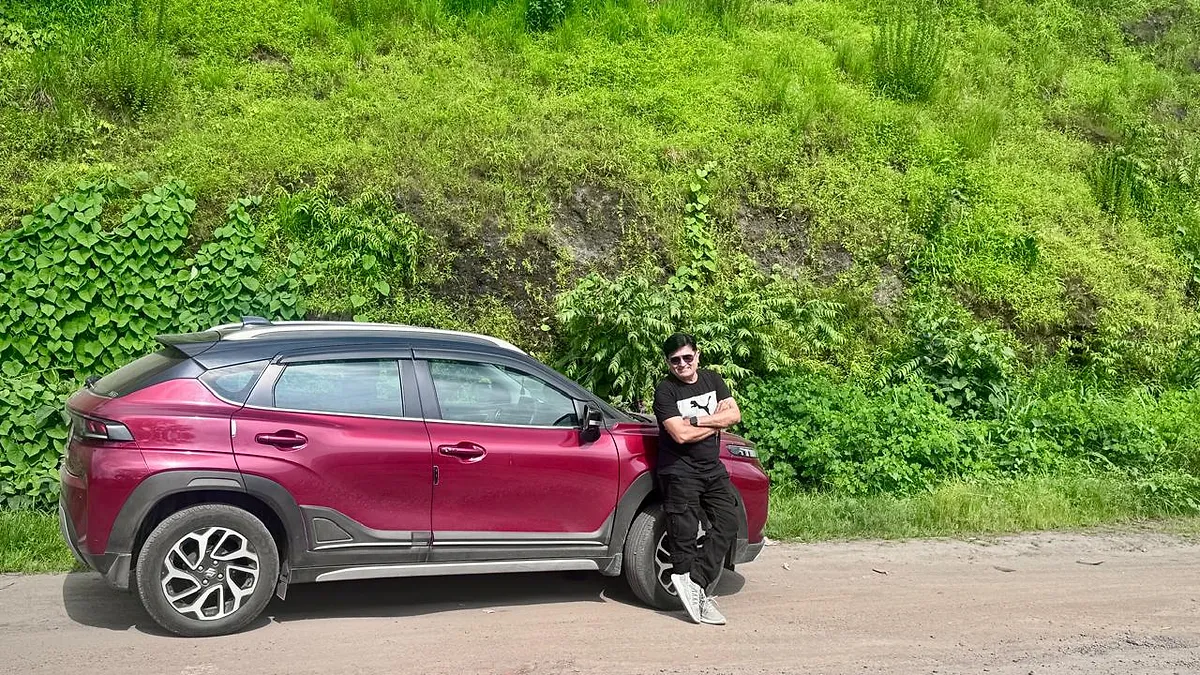
So Saturday morning, the plan was to leave at 6 AM.
We left at 6:20.
Twenty minutes late.
But this is a road trip, not an army parade. Twenty minutes idhar-udhar chalta hai.
.
I got into the car, started the engine and soon we were zipping through the early morning roads. Mumbai was unusually quiet, the roads were almost empty and the weather was perfect.
For a few minutes, everything was going exactly according to plan.
Which, in hindsight, should have worried me.
And then Google Maps entered the story.
Somewhere around Santacruz, I missed my left turn.
Dil galti kar baitha hai........... starting playing in my mind 😜
https://www.lifeofaash.com/discovering-hidden-gems-the-mankeshwar-shiva-temple-maharashtra/
Now normally, I would blame myself.
But Google Maps has made us lazy.
When you have that little blue line guiding you, you start believing that you don’t need your own brain anymore.
“Google hai na!”
So instead of taking the usual Vashi route out of Mumbai, I obediently followed the lady sitting inside my phone.
And before I knew it…
Atal Setu.
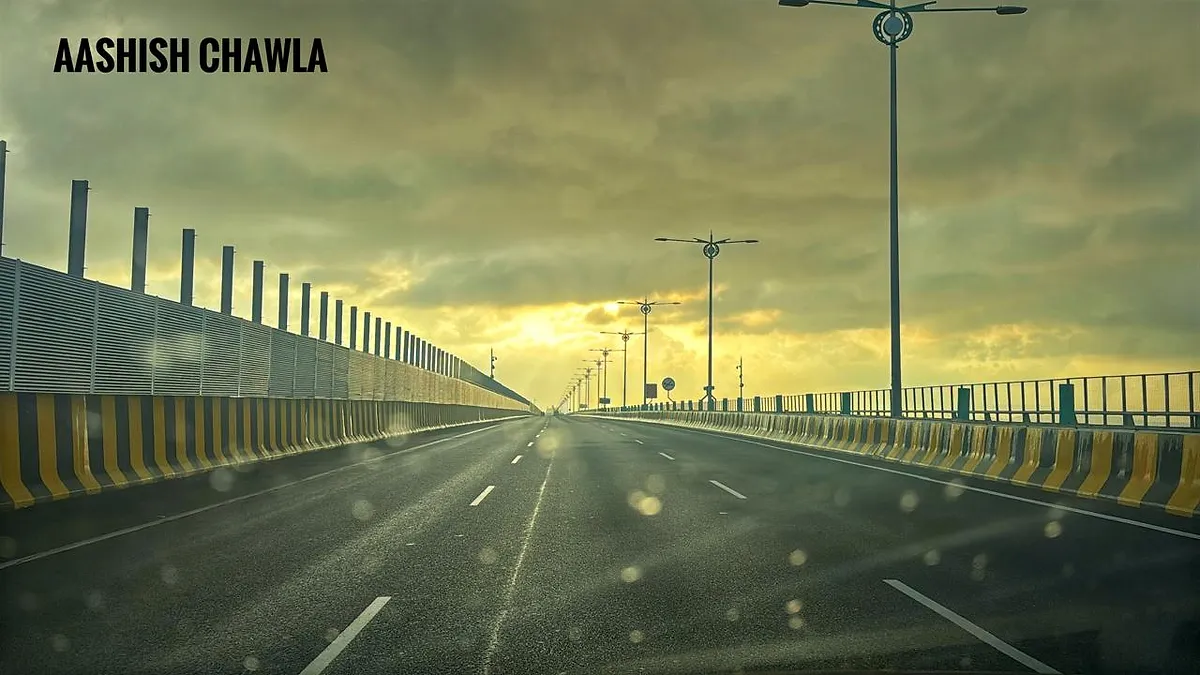
Now, Atal Setu is a beautiful bridge. No doubt about that.
But it wasn’t exactly part of the original plan.
And then came the second zor ka Jhatka dheere se 😆
₹250 toll.
So, within the first hour of the trip, I had already achieved two things:
Missed the turn.
Paid ₹250 extra.
Not a bad start! 😆
But I decided not to grumble.
Kyo ki rone se na toh woh turn wapas aane wala hai, na woh 250 Rs
The view from Atal Setu was beautiful. The sea was down below, clouds were hanging above and the early morning light made everything look rather cinematic.
I was enjoying the drive.
“Plan kuch bhi ho, Mumbai ka toll apna fixed hai!”
https://www.lifeofaash.com/shri-kopeshwar-temple-khidrapur-day-2-kolhapur-trip/
And then, as soon as we came out of the Atal Setu exit…
BANG !!!! Aaj ka teesra Jhatka, woh bhi zor se
Traffic.
Not normal traffic.
The kind where you stop moving and start questioning every decision that brought you there.
I am using the word “trapped” very deliberately.
For almost 45 minutes, I was sitting there surrounded by trucks, containers and cars.
There was nowhere to go.
No escape route.
No shortcut.
Just me, my car and a collection of very large vehicles that seemed determined to make sure I didn’t reach Satara.
At one point, I genuinely felt like the trucks had formed a committee against me.
“Satara jaana hai? Pehle permission lo!”
Eventually, I escaped.
And the moment I hit the expressway, it felt like freedom.
Honestly, there are few better feelings than getting out of a traffic jam and suddenly finding yourself on an open highway.
The car was cruising, the road was smooth, the scenery was getting greener…
Life was good again.
Until Pune.
Yes.
Another traffic jam.
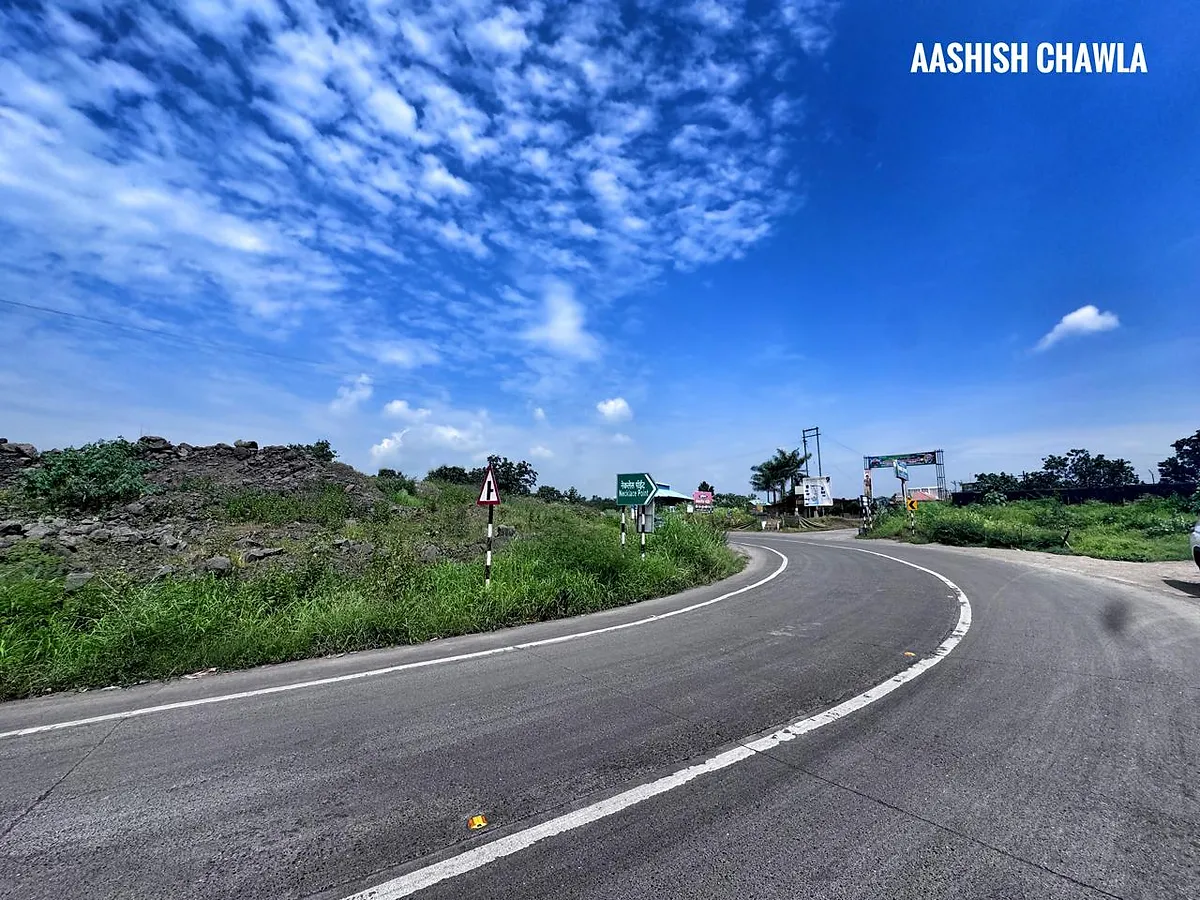
.
By now I was seriously reconsidering the decision to leave at 6:20 instead of 6.
“Maybe those 20 minutes were actually very important.”
Or maybe those 20 minutes were sitting in traffic somewhere, laughing at me.
To make matters worse, I was incredibly sleepy.
The previous night, thanks to the excitement of the trip, I had barely slept for two hours.
So here I was — long weekend traffic, trucks, highway driving and my eyelids slowly becoming heavier.
Not exactly the ideal combination.
My wife was probably looking at me and thinking:
“Trip plan kiya tha ya sleep deprivation challenge?”
At this point, we decided that perhaps the original itinerary needed a little editing.
The plan was to explore Wai, visit Mahaganpati and then eventually reach Satara.
But I was now thinking about only one destination:
A hotel room and a bed.
So we decided to go straight to Satara, check into a hotel and let me sleep.
Simple.
Except road trips rarely respect simple plans.
By the time we came out of the traffic, it was almost afternoon and half the day had disappeared.
So obviously, before anything else…
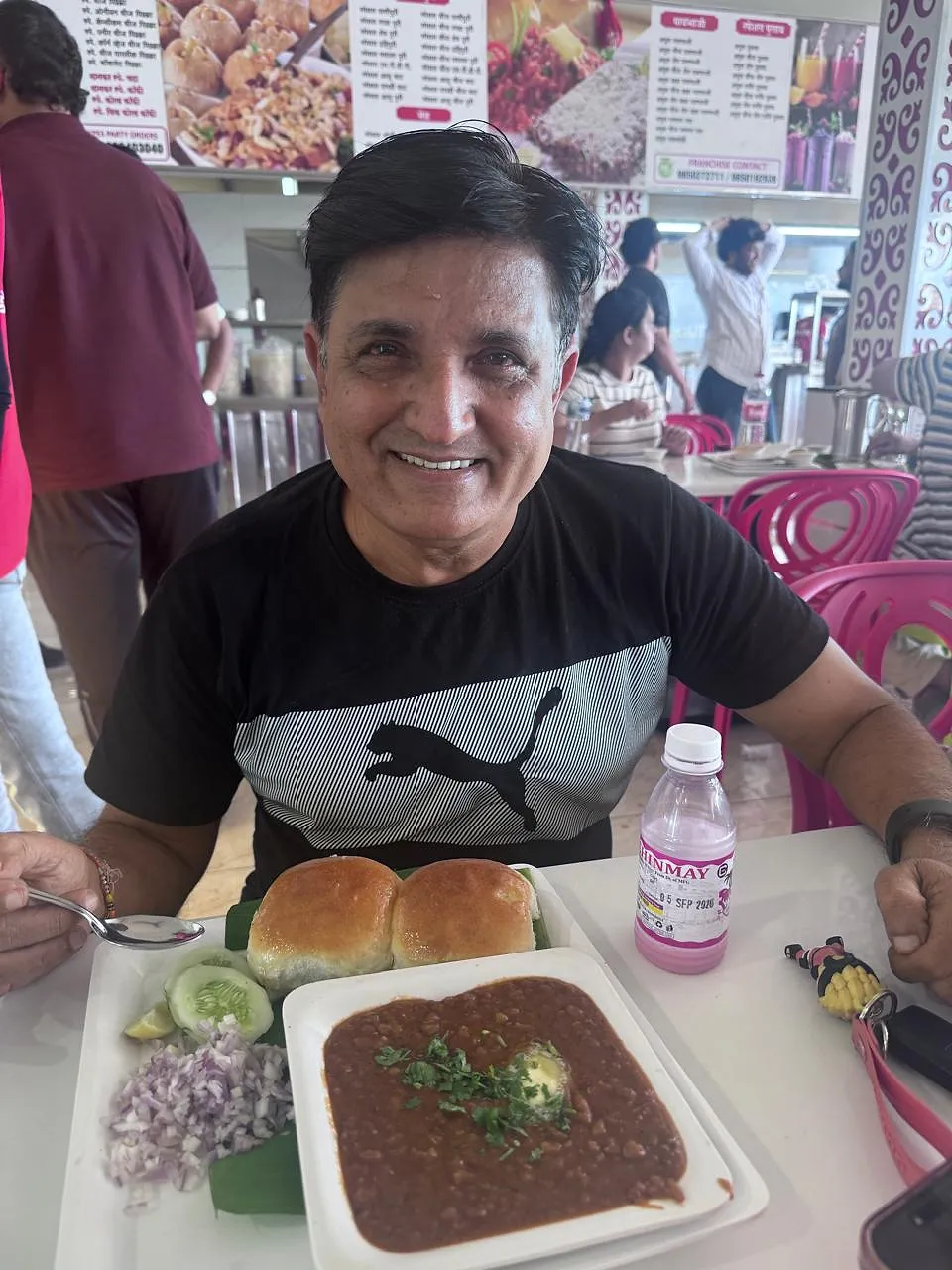
Food.
We stopped at Mankar Dosa on the highway.
It’s a chain and, unsurprisingly, on a long weekend it was packed.
We eventually got our food.
Unfortunately, by the time it reached us, the dosa had probably lost its enthusiasm for life.
It was a little cold.
But hunger has a wonderful way of making you forgiving.
We ate.
And something strange happened.
I don’t know whether it was the dosa, the coffee, the fresh air or simply the fact that I had finally eaten…
But I suddenly felt rejuvenated.
The man who was planning to go straight to a hotel and sleep was now saying:
“Why don’t we go to Necklace Point?”
My wife probably knew at that moment that the hotel plan was officially dead.
“Aapko sona tha na?”
Yes, I had said that.
But road-trip promises are temporary.
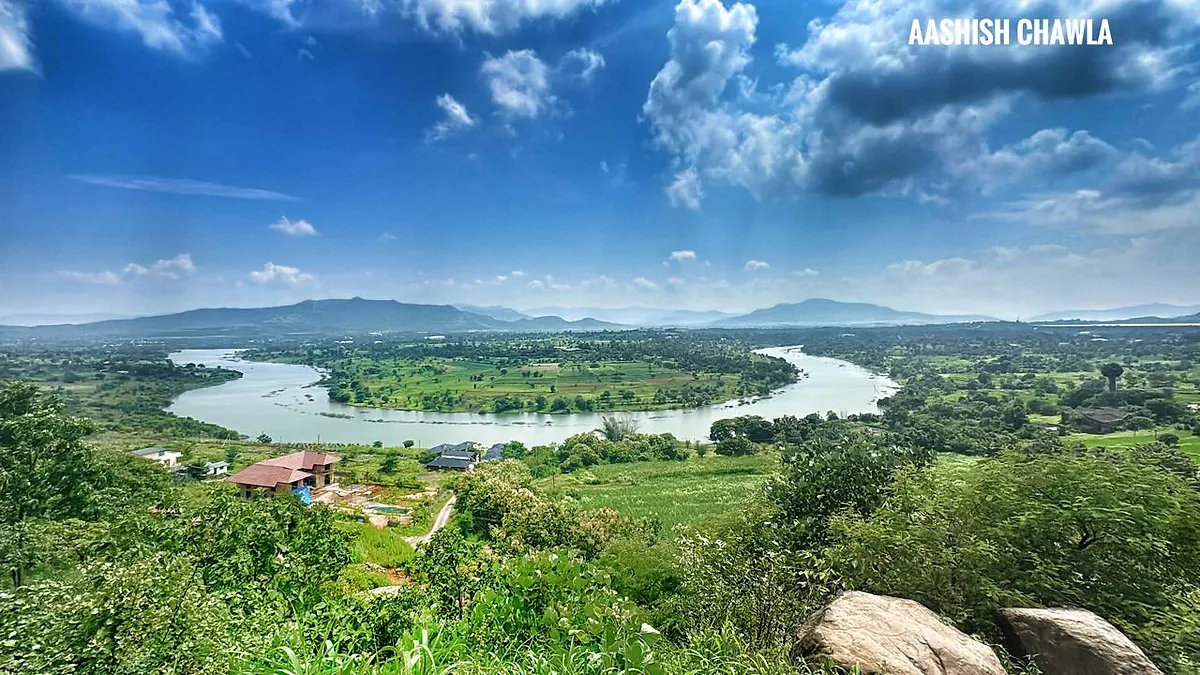
Necklace Point
Necklace Point is near Bhor, on the way towards Wai.
It gets its name from the way the Krishna River curves through the valley below, forming a shape that resembles a necklace when viewed from the viewpoint.
During the monsoon, the whole landscape becomes dramatically greener. The river winds between the hills, mist floats over the valleys and the surrounding Sahyadri ranges look like they have been freshly painted.
And what a place.
The monsoon had done its job beautifully.
Green hills, misty skies, valleys and that fresh Western Ghats feeling that makes you want to stop the car every five minutes and take a photograph.
So obviously, we stopped.
Photographs were clicked.
Lots of them.
“Ek photo aur” became ten photos, and ten photos became a full photoshoot.
And then came the mandatory one where I decided to stand on a rock for a better angle.
I was busy posing.
My wife, meanwhile, was having a completely different experience.
Her heart was probably saying:
“Photo baad mein le lena, pehle neeche utro!” 😂
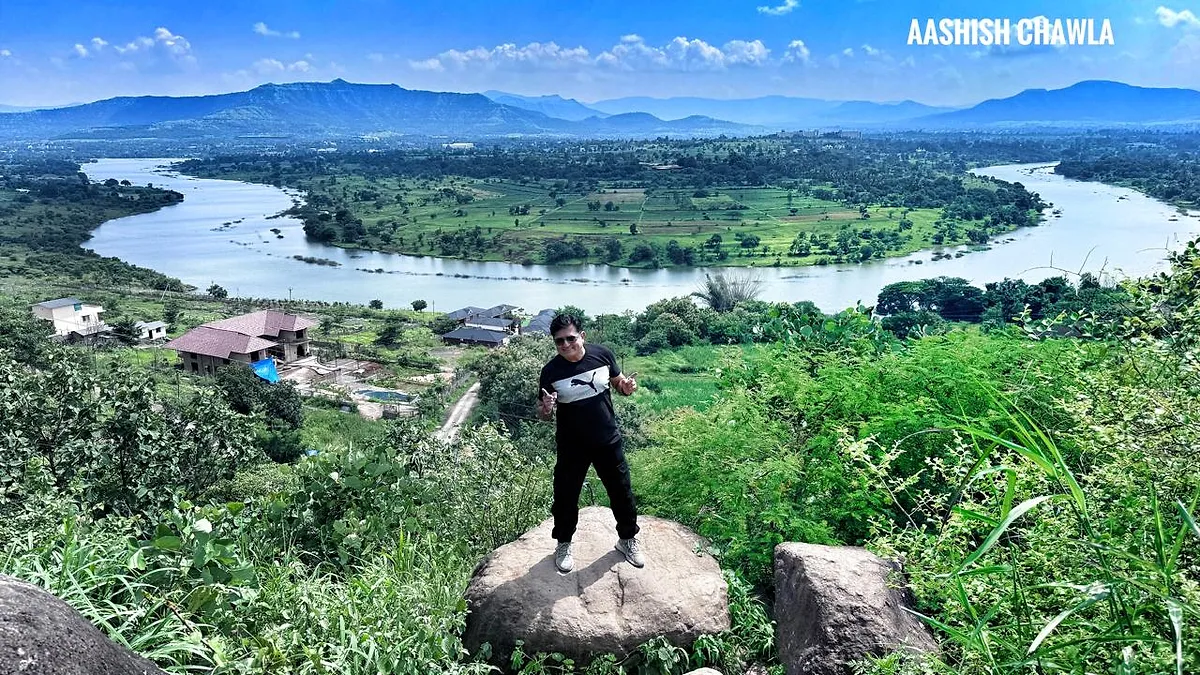
.
For me, it was a photo opportunity.
For her, it was a potential insurance claim.
“Hero banne ki zaroorat nahi hai, zinda rehna bhi important hai!”
Somehow, I survived.
Photos done, we moved on towards Wai.
And entering Wai through those narrow village roads was another little adventure.
You know those roads where you are driving comfortably until you suddenly see a truck coming towards you and immediately realise that both vehicles cannot possibly occupy the same piece of road?
Exactly those roads.
There were a few moments where I was gripping the steering wheel a little tighter than usual.
The truck driver and I exchanged that universal Indian driving look:
“Aap jaoge ya main jaaun?”
Eventually, we reached Mahaganpati.
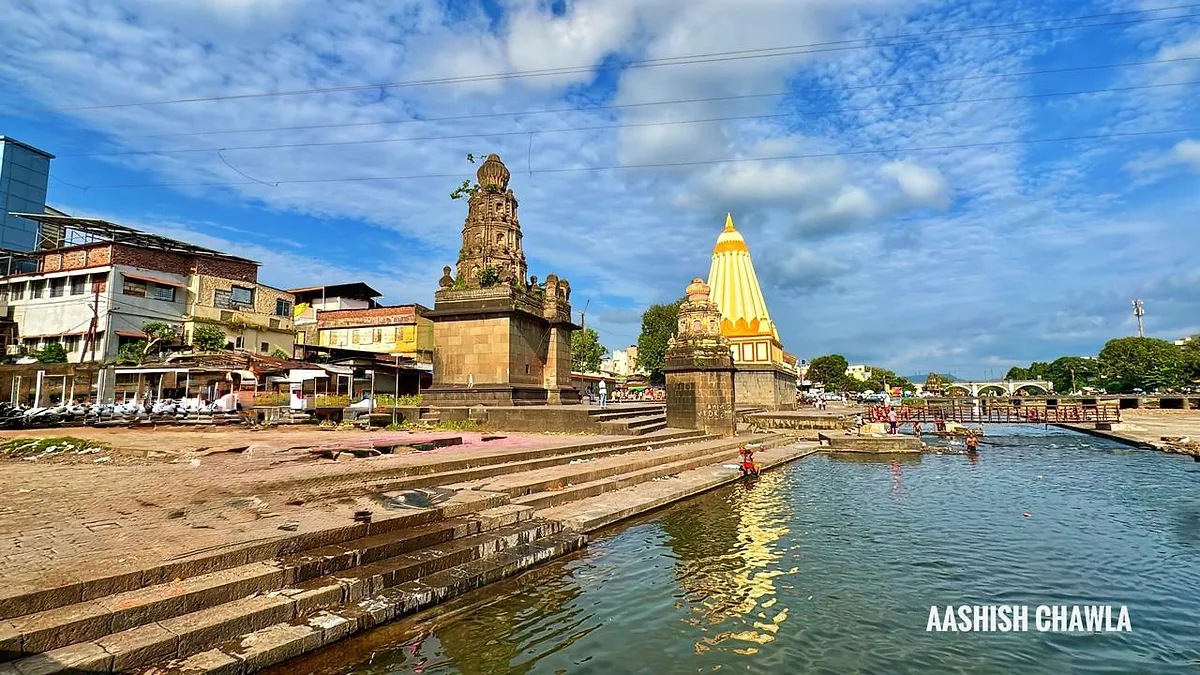
Mahaganpati, Wai
We parked the car in the large parking area outside the temple and went in for darshan.
Mahaganpati Temple, also known as Dholya Ganpati, is one of Wai’s most famous temples. The idol is known for its large, imposing form, and the temple sits beautifully along the Krishna River.
Wai itself is an old temple town, with several ghats and historic temples built along the river. The area developed as an important cultural and religious centre under the Maratha and Peshwa influence, which is why you see so many traditional stone temples and riverfront structures here.
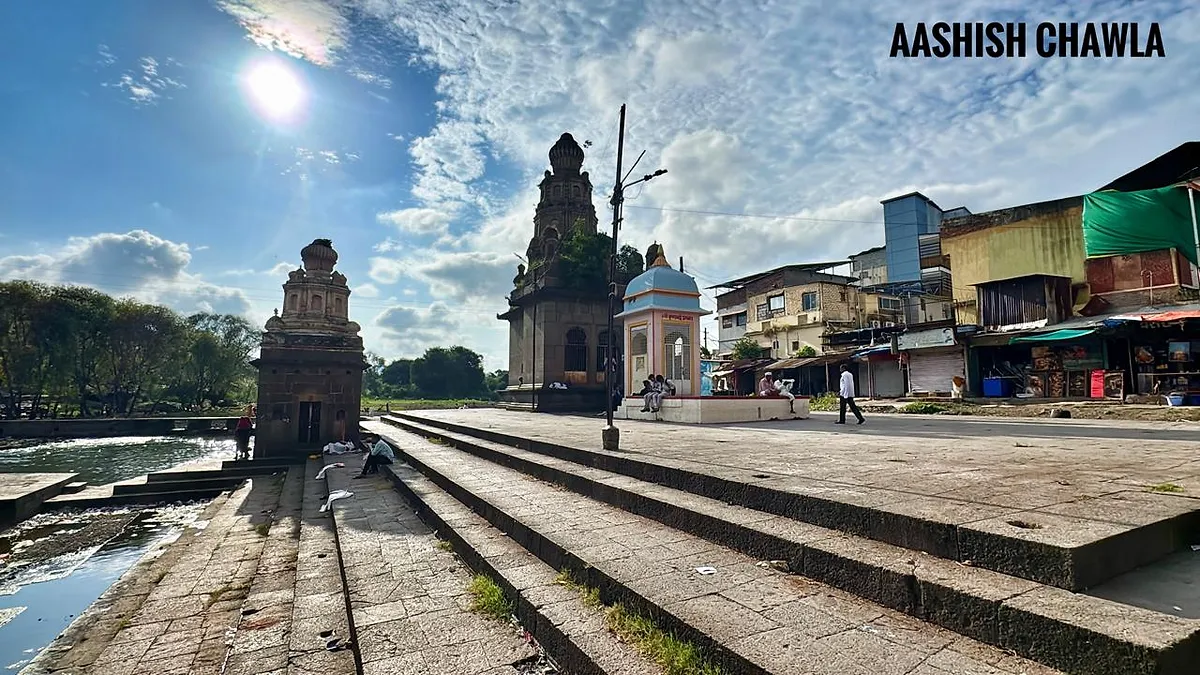
Mahaganpati is beautifully located on the banks of the Krishna River, and the entire setting has that old-world Maharashtra charm.
And if you have watched Hindi films, you may find the place strangely familiar.
The ghats around Mahaganpati have appeared in films such as Swades, Omkara and Gadar: Ek Prem Katha. The calm river, old stone steps and traditional architecture make the location look naturally cinematic.
After darshan, we walked behind the Mahaganpati temple to Kashi Vishweshwar Temple.
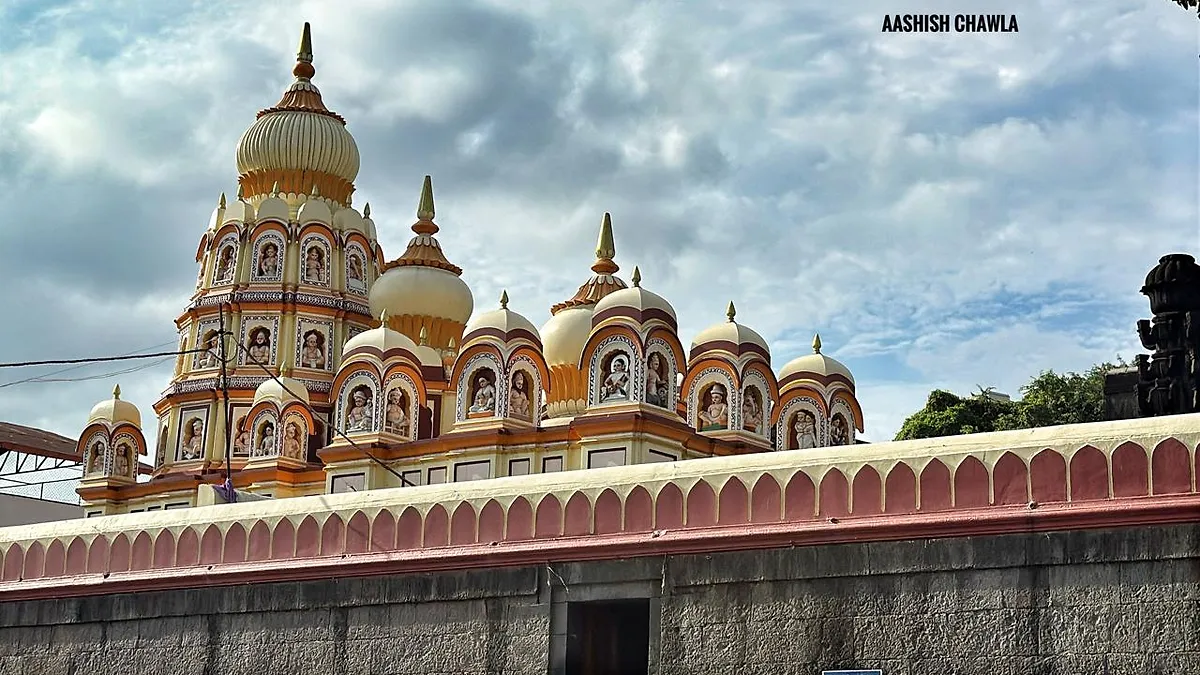
Kashi Vishweshwar Temple.
It’s an ancient Mahadev temple, beautifully made and very different from the polished, modern temples we see today.
The temple is built in the traditional Hemadpanthi style, known for its sturdy stone construction and minimal use of decorative material. The design feels solid, practical and timeless — as if the builders were saying, “Decoration baad mein, pehle 500 saal tikna chahiye.”
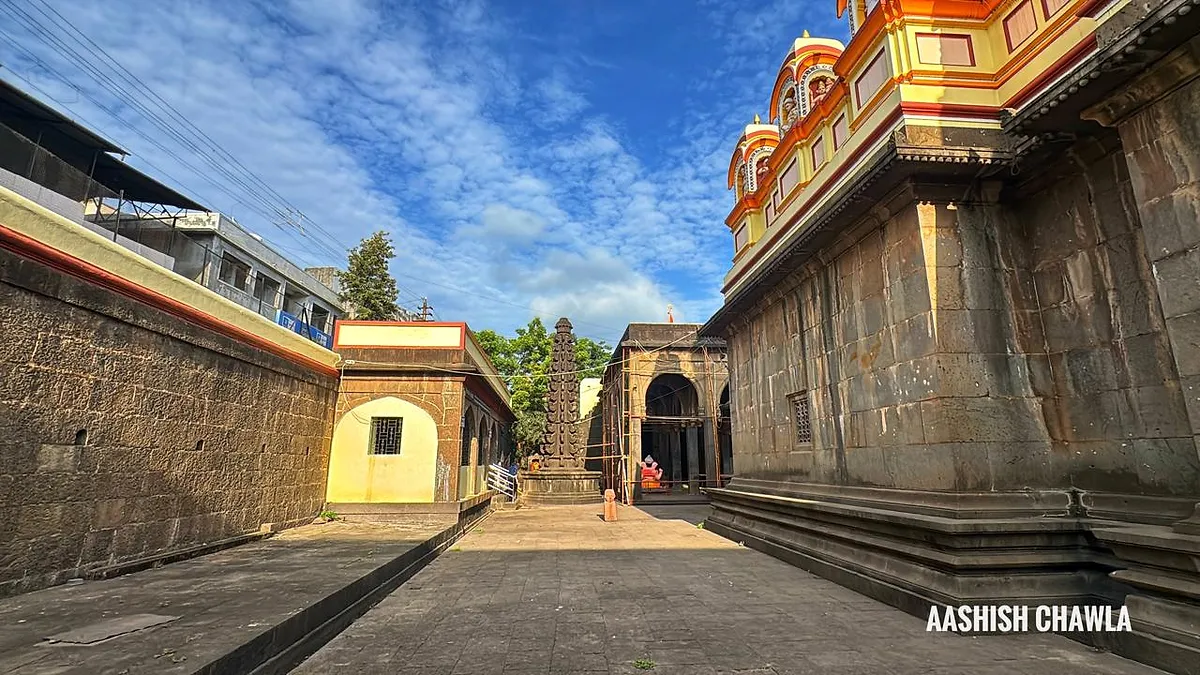
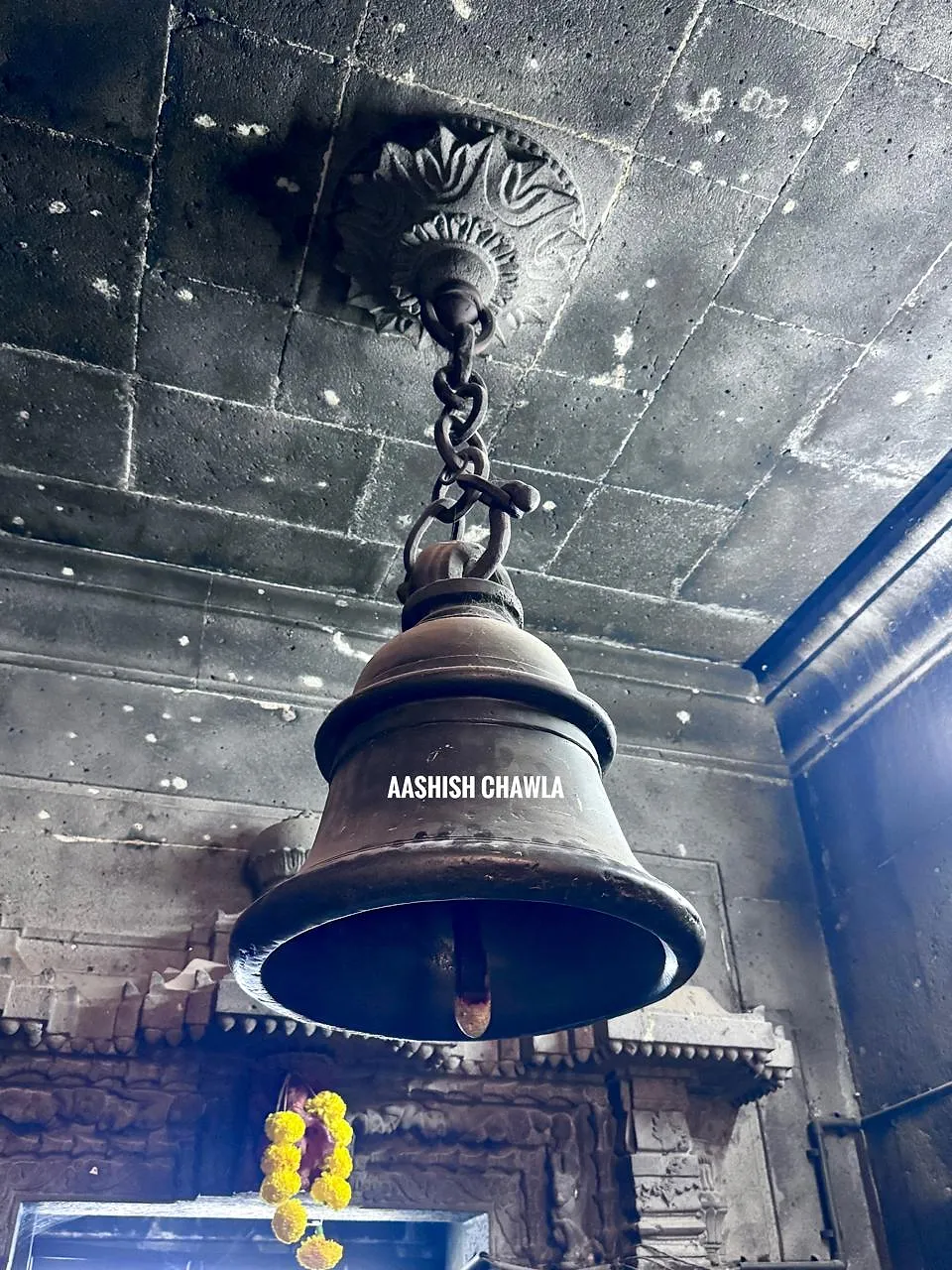
While exploring Kashi Vishweshwar Temple, something quite unexpected caught my eye — a huge old Portuguese bell hanging inside a Mahadev temple.
My first thought was, “Portuguese bell… in a Shiv temple? What’s the story here?”
And that’s what makes places like this so interesting. You go there to see a temple, but end up discovering little pieces of history that you weren’t looking for in the first place. That massive bell has clearly been around for a long time, silently witnessing the changing times.
.
There is something about these old temples.
The stone, the architecture, the quietness…
They don’t scream for attention.
They simply sit there, having witnessed generations come and go.
We spent some time there, clicked a few photographs and then headed towards our next stop.
Menavali Ghat.
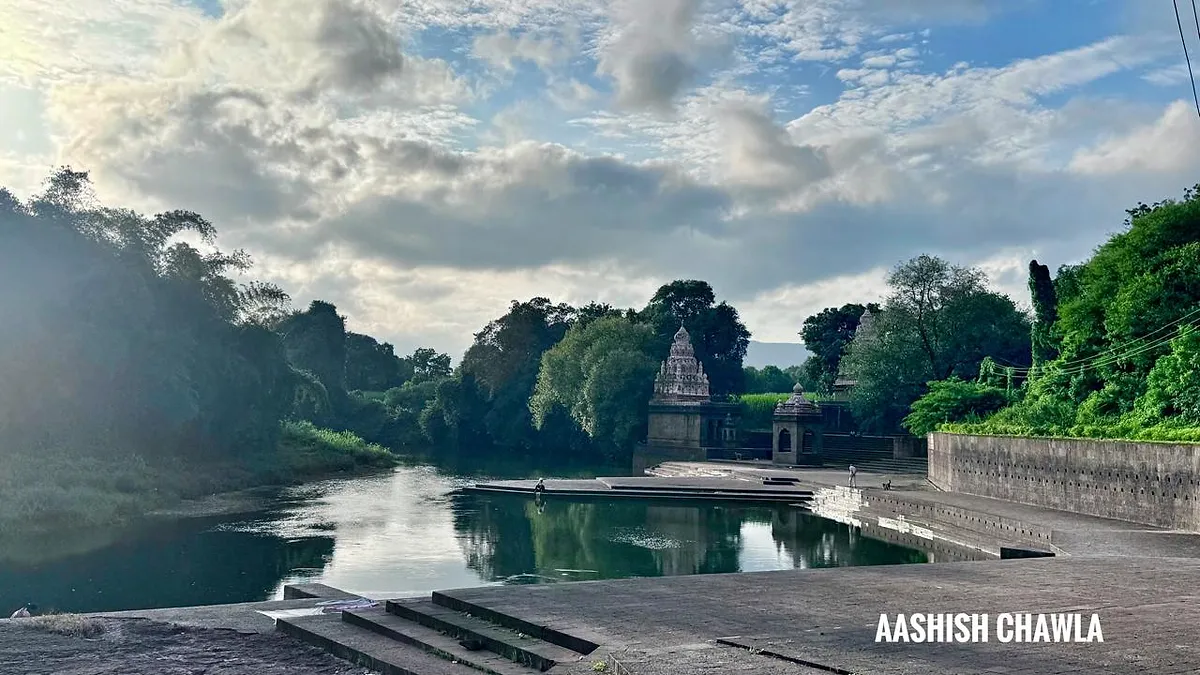
Menavali Ghat
Again, the road was narrow.
By now, though, we had developed a certain confidence.
Or perhaps we had simply become used to it.
“Ab toh tempowala bhi family member lag raha hai.”
We reached Menavali Ghat and suddenly everything slowed down.
No traffic.
No honking.
No Google Maps drama.
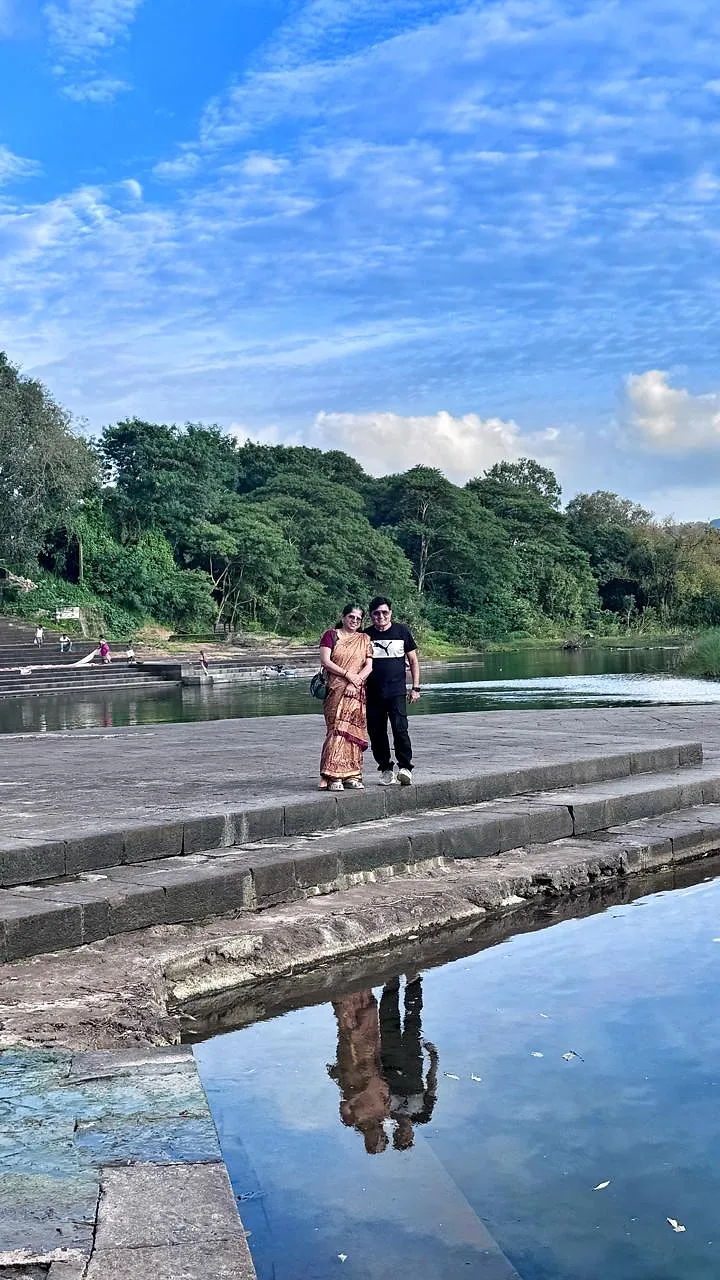
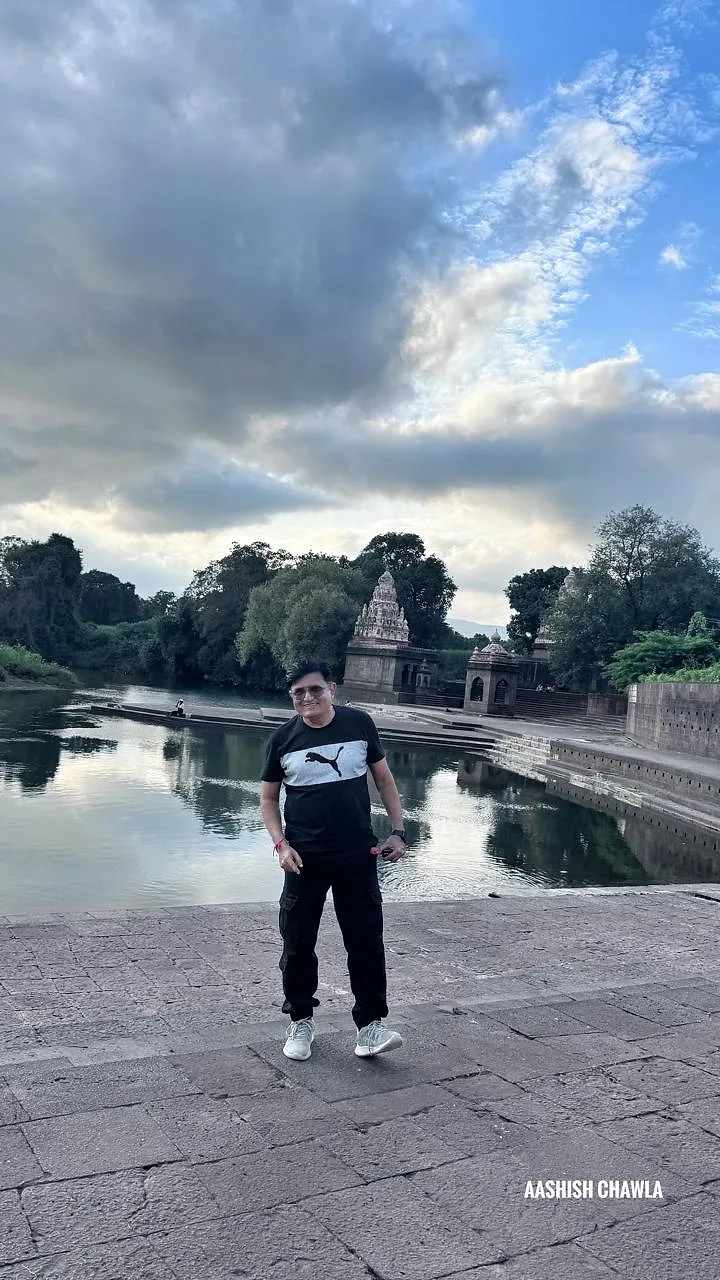
Just the Krishna River, the surrounding greenery and a beautiful evening sky.
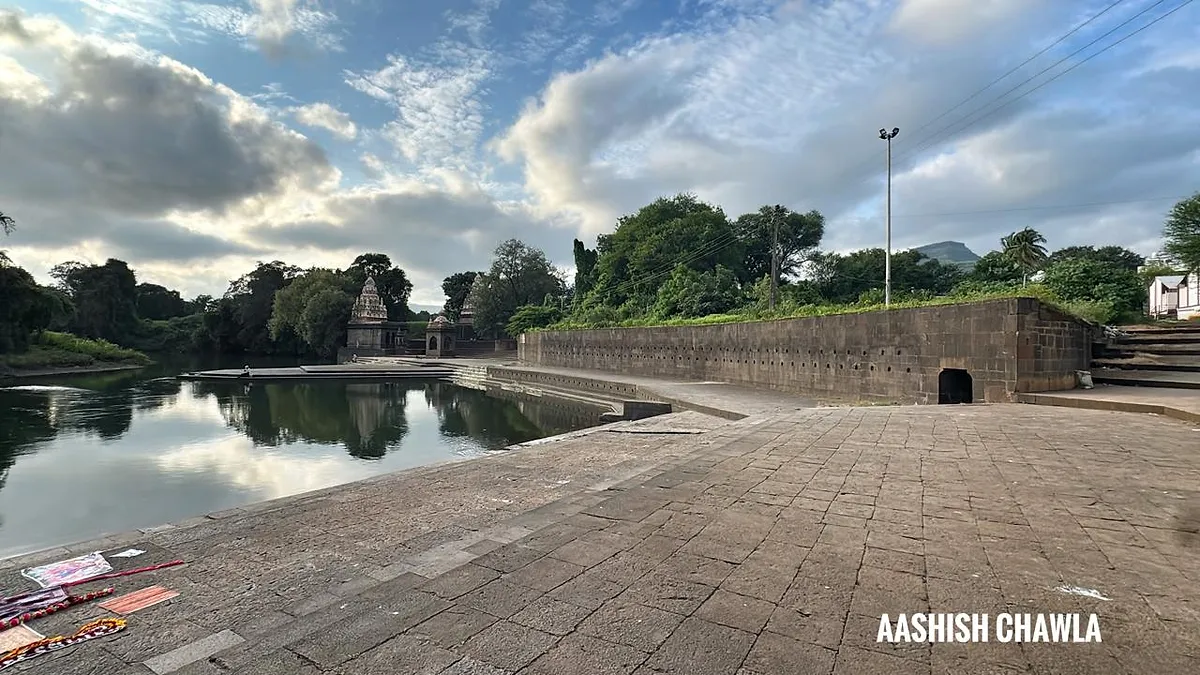
Menavali Ghat is one of the most picturesque riverfront locations near Wai. The stone steps lead down towards the Krishna River, and the setting is surrounded by historic architecture, temples and the famous Nana Phadnavis Wada.
The ghat was built in the eighteenth century during the Peshwa period by Nana Phadnavis, one of the most influential statesmen of the Maratha Empire. The wada and the riverfront were part of this historic settlement, which is why the place feels like a living piece of Maratha-era Maharashtra rather than just another tourist spot.
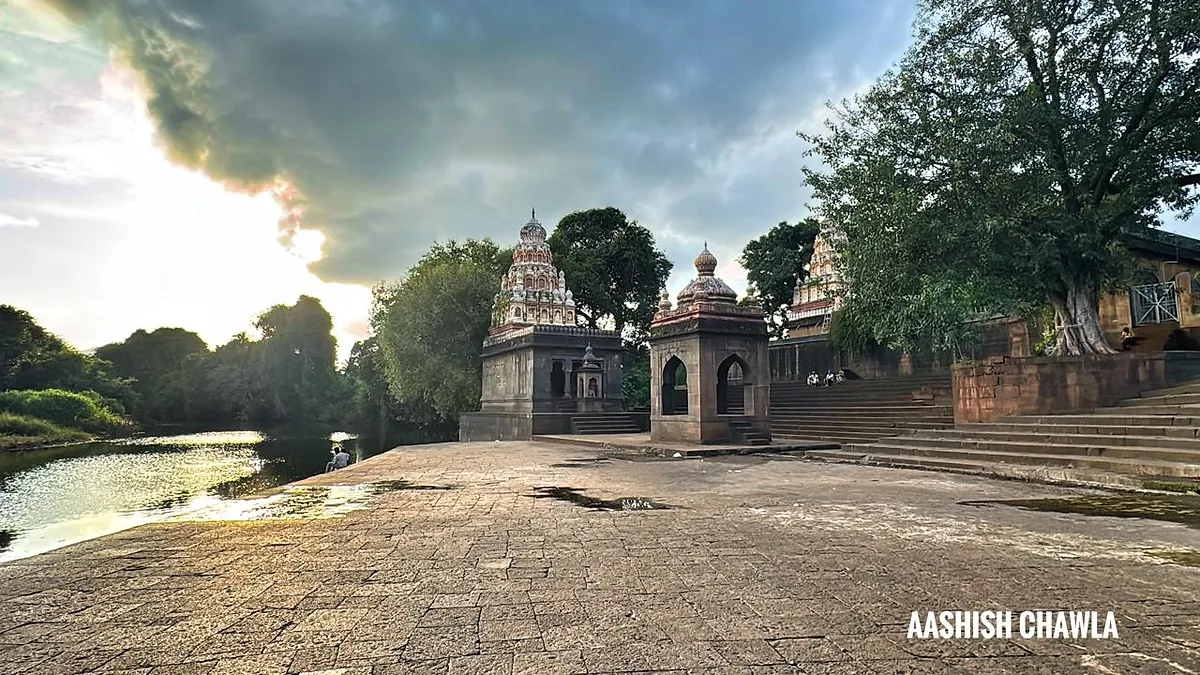 The sun was beginning to set and its reflection on the river was absolutely gorgeous.
The river was calm, the sky was turning orange and the old stone steps were glowing in the evening light.
We just stood there for quite some time.
.
And yes, Menavali Ghat may also look familiar if you watch Hindi films. Movies such as Swades, Gadar: Ek Prem Katha, Mangal Pandey: The Rising and Deewaar have used the ghats and surrounding heritage locations around Wai and Menavali.
Standing there, it was easy to understand why filmmakers keep coming back.
The place already has everything a film set needs:
A river.
Old stone architecture.
A dramatic sky.
And absolutely no need for artificial background decoration.
Sometimes you travel to a place with a long list of things to see.
But the moment you reach somewhere like Menavali, you realise you don’t really need to do anything.
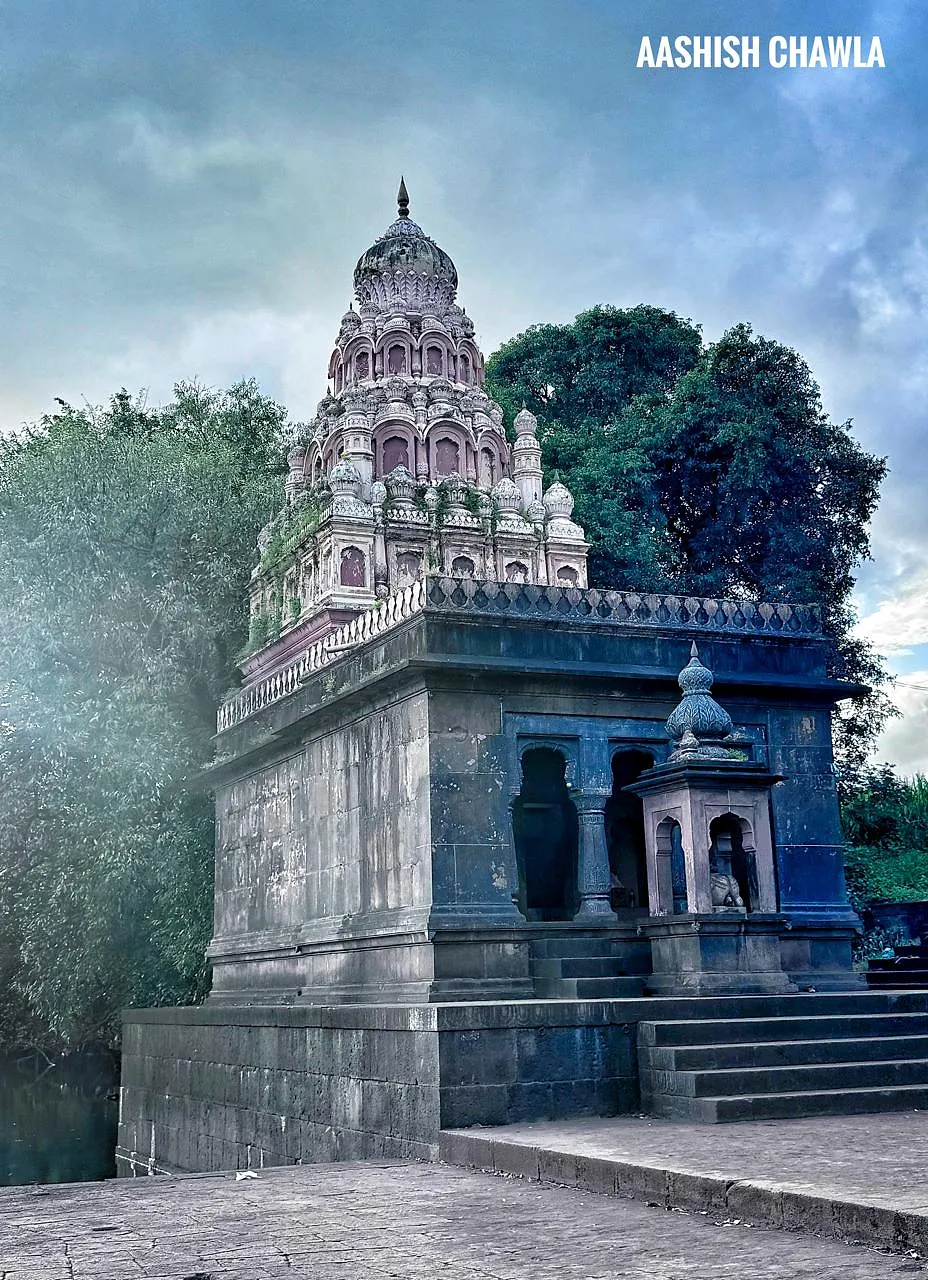
Just sit.
Look around.
Take a few photographs.
And let the place do the rest.
That evening was one of those moments.
We had actually planned to visit Nana Phadnavis Wada, which is right outside Menavali Ghat.
But the sun was setting and time was running out.
So we decided to leave it for another trip.
After all, you need to leave something behind for the next reason to come back.
Also, if we had tried to cover everything in one day, I would have needed another long weekend just to recover from this long weekend.
And with the sun disappearing, we finally started towards Satara.
By now, hunger had returned.
So we decided that dinner should happen before checking into the hotel.
Because once I reached that room, there was a very real possibility that I would disappear into the bed without even unpacking.
We spotted Vithal Kamath on the highway and stopped.
And thankfully, this time the food was really good.
A proper meal, a full stomach and finally…
Satara, here we come.
We reached the hotel, checked in, and I think I broke some kind of personal record.
It wasn’t even 9 PM.
And I was already in bed.
No Instagram.
No Netflix.
No checking tomorrow’s itinerary.
Nothing.
Just sleep.
“Aaj ka quota poora. Ab insaan kal milega.”
Because tomorrow was going to be another long day.
And looking back, Day 1 was supposed to be a simple Mumbai-to-Satara drive.
Instead, we got a missed turn, an unexpected Atal Setu crossing, ₹250 extra toll, a 45-minute traffic jam, another traffic jam near Pune, a sleepy driver, a cold dosa, Necklace Point, a nervous wife, narrow village roads, Mahaganpati, Kashi Vishweshwar, Menavali Ghat and a beautiful sunset.
Not bad for a day that didn’t quite go according to plan.
Actually…
Maybe the best road trips are the ones that don’t.
Because sometimes the wrong turn takes you to a better view.
Sometimes Google Maps takes you somewhere you never planned to go.
And sometimes the plan you abandon becomes the story you remember.
“Itinerary fail ho sakta hai, memories nahi.”
Day 1 done.
But Satara had plenty more in store for us.
Click here for Part 2.
https://www.lifeofaash.com/satara-trip-day-2-sajjangad-windmills-thoseghar-waterfall
Written by
Aashish Chawla
Hi, I am Aashish Chawla — The Weekend Wanderer. Weekend wandering is my passion: I love connecting with new places and meeting new people. Through my blogs I will introduce you to lesser-explored places that may be very near you, yet undiscovered. Come, let's wander into the wilderness of nature!
Other than travelling, I love writing poems.
Keep reading
You may also like
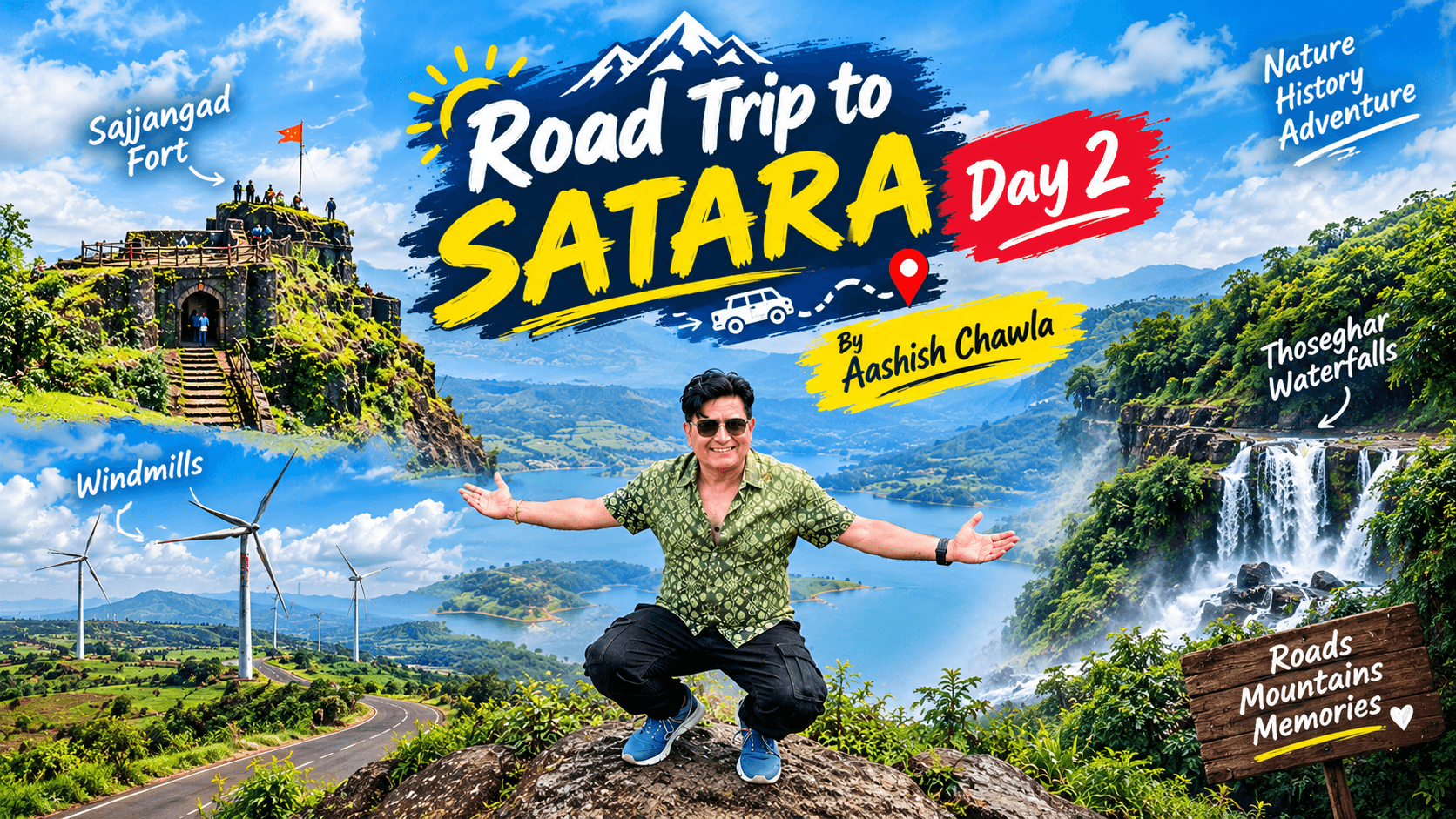
Satara Road Trip Day 2: Sajjangad, Windmills, Thoseghar & an Unexpected Goodbye
Explore Sajjangad, Windmills and Thoseghar Waterfall on a Satara monsoon road trip from Mumbai. A beautiful journey that took an…
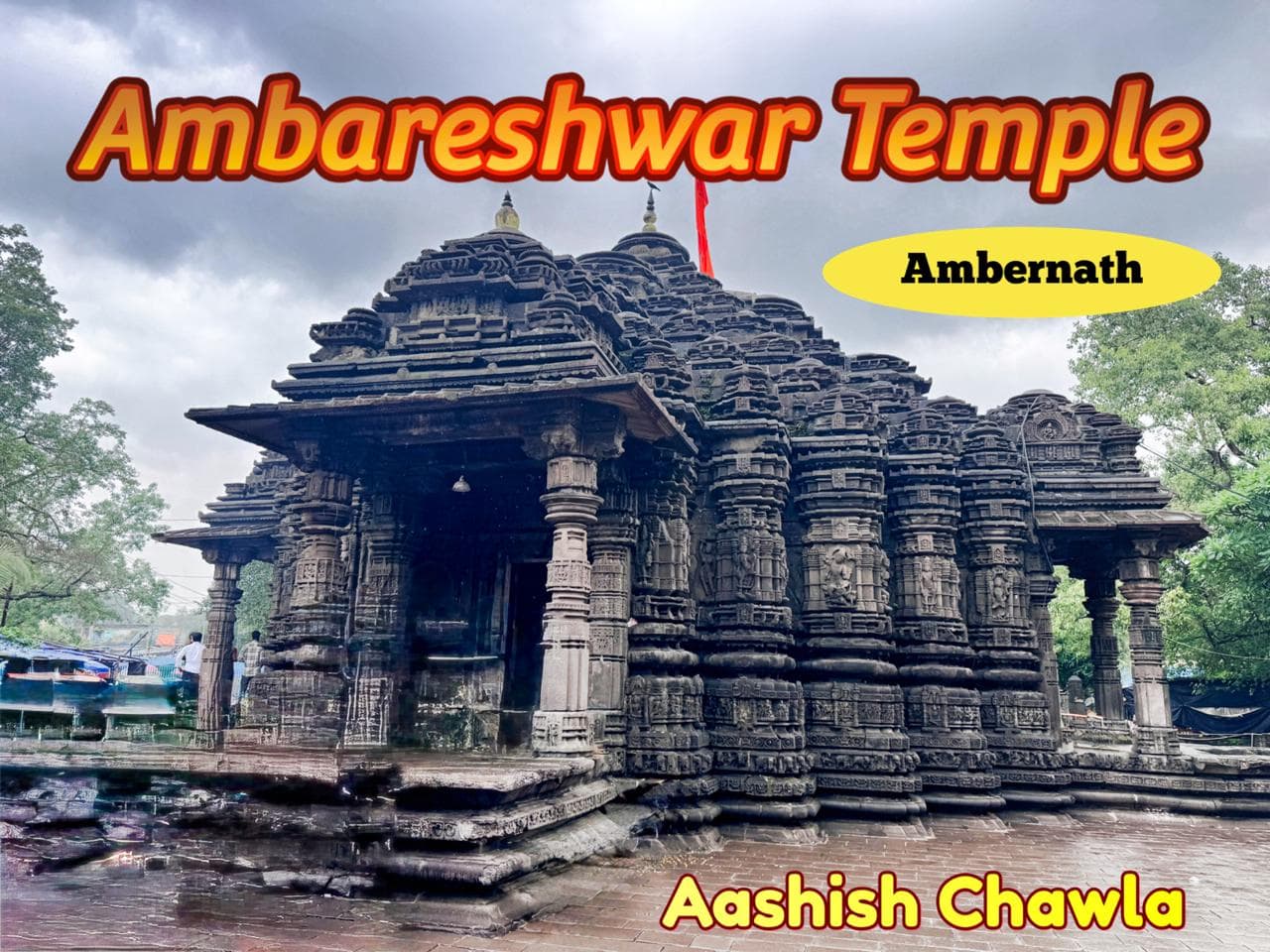
Shree Ambreshwar Temple, Ambernath — A Thousand Years of History
Ambareshwar Temple, Ambernath A Thousand Years of History. There are some trips that are meticulously planned weeks in advance.…
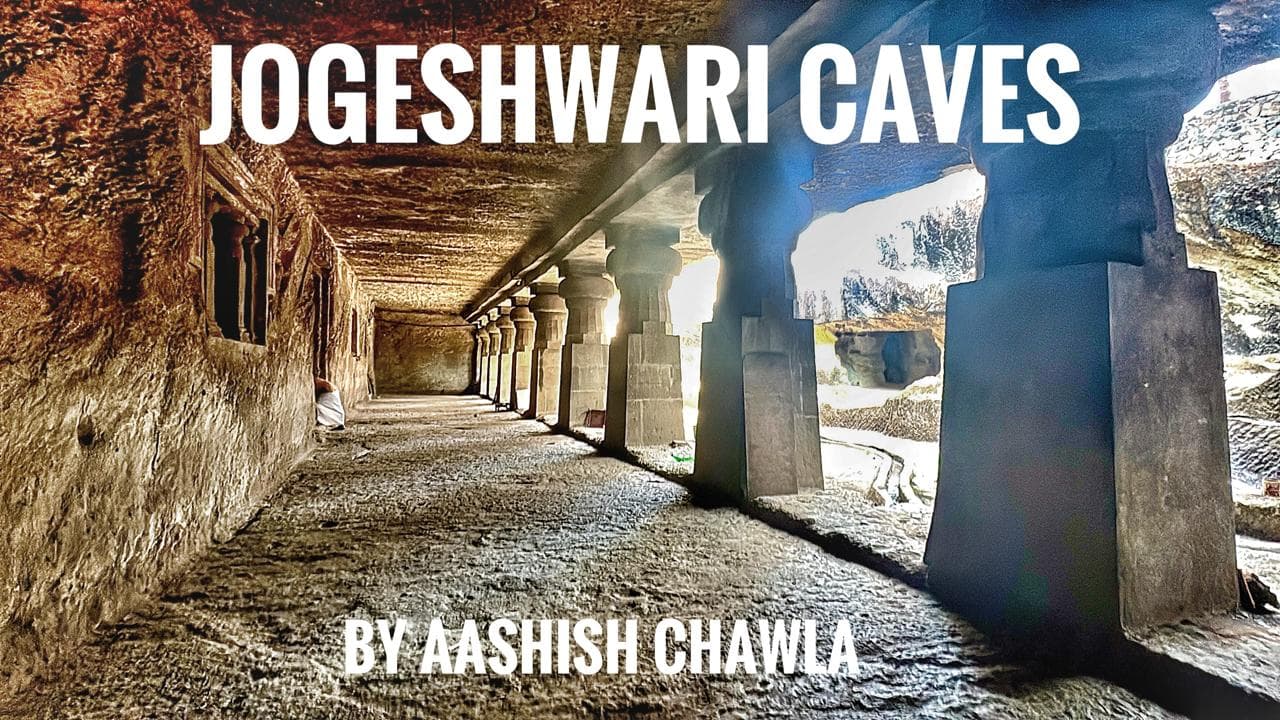
A Short Trip to Jogeshwari Caves Mumbai – Hidden History in the Heart of the City
Jogeshwari Caves: A Day When We Took the Metro… and Landed in the 6th Century Mumbai is a funny city. You can be standing in a…
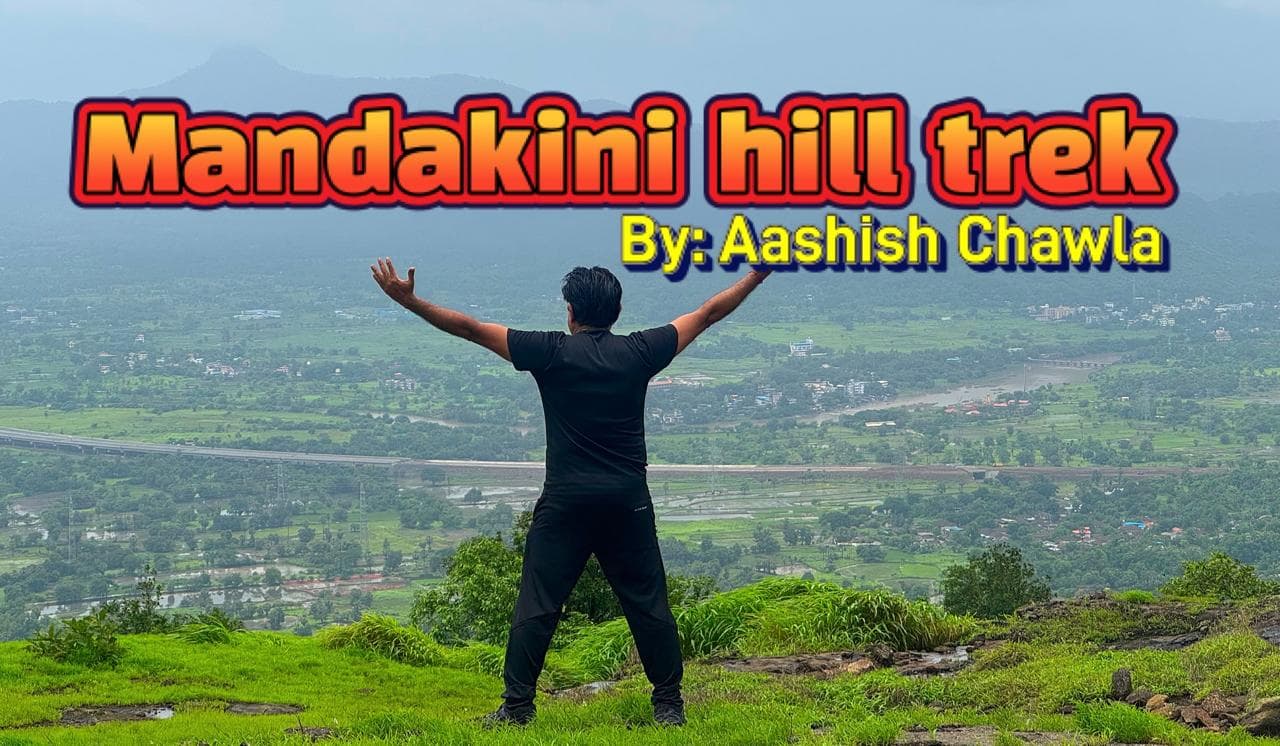
Mandakini Hill Trek – A Hidden Gem Near Mumbai
Mandakini Hill – No, Not That Mandakini! 😜 One fine morning, just as I was getting into my groove of doing absolutely nothing, a…
No comments yet — start the conversation.
Comments are closed for this post.